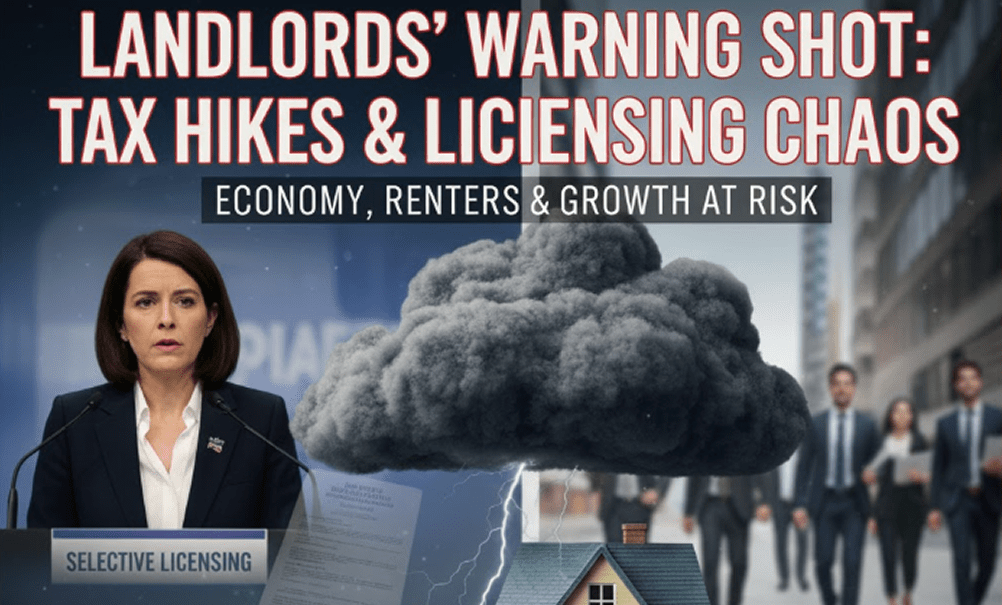
The National Residential Landlords Association (NRLA) has issued a strong warning to the Chancellor ahead of the upcoming Budget, cautioning that any new taxes targeting landlords—such as imposing National Insurance (NI) charges on rental income—will severely undermine the government’s goals for economic growth and social mobility.
Key Economic Role of Renters Highlighted
The warning is backed by new research, commissioned by the NRLA and conducted by former Treasury official Chris Walker, which underscores the crucial role the private rented sector (PRS) plays in the economy:
- Labour Mobility: The report found that 45% of private renters live within 5km of their workplace, significantly higher than the 29% of owner-occupiers. This proximity demonstrates the sector’s vital role in supporting career progression and productivity by allowing people to move easily for work.
- Industry Agreement: Major buy-to-let lender, Nationwide, echoed this sentiment, confirming the PRS’s “important role to play in economic growth by supporting labour mobility.”
- Expert Warning: Paul Johnson, former head of the Institute for Fiscal Studies (IFS), has also weighed in, predicting that higher taxes on landlords would inevitably lead to reduced rental supply and increased rents for tenants.
NRLA’s Plea to the Chancellor
Ben Beadle, Chief Executive of the NRLA, emphasized that the private rented sector is a “significant driver of labour and social mobility” that enables people to pursue new opportunities and education—all central to the government’s growth agenda.
He argued that continued speculation about tax hikes is hindering investment, shrinking supply, and ultimately driving up rents.
The NRLA’s core demand:
“The Chancellor must use this critical Budget to back responsible landlords… That means using the tax system to encourage long-term investment, as opposed to prioritising short-term revenue grabs.”
The message is clear: taxing landlords is not a victimless short-term revenue boost, but a policy that risks critically damaging the very economic and social opportunities the government seeks to promote.